Monthly Archives: February 2015

The Balancing Act Homework and Extracurricular Lives in School-Aged Children

For every generation of parents who have school age children, there is a theme that binds parents from the past to present: either there is too much homework, or too many extracurricular activities. Modern life has sped up the pace incredibly, especially in metropolitan cities around the world, making the demands after the school day on the family become even more stressful.

And it isn’t actually an unusual complaint or observation from a parent. The perception that homework has increased in recent years is supported by the results of a research study from the University of Michigan in 2000. The Institute for Social Research at the University of Michigan found that time spent on home study by 6- to 8-year-old children more than doubled between 1981 and 1997 (Hofferth & Sandberg, 2000). Their results found a 146% increase between 1981 and 1997 in the time that six- to eight-year-old children (generally in grades K-3) spent on home study. In 1981, time diaries that were used to record homework times indicated that primary-grade children spent an average of 52 minutes studying per week; this figure increased to 128 minutes per week in 1997 (Hofferth & Sandberg, 2000). The proportional increase seemed very large because the baseline measurement—time spent on study in 1981—was very small. Moreover, the ISR study found no substantial increase in home study time over the same period for nine to twelve-year-old children (generally third to sixth graders). Their average weekly home study time was 3:22 in 1981 and 3:41 in 1997— a difference that was not large enough to achieve statistical significance.(Hofferth & Sandberg, 2000)

homework

In 2003, The Journal of Educational Evaluation and Policy Analysis published a study by Brian P. Gill and Steven L. Schlossman entitled,  “A Nation at Rest: The American Way of Homework.” The researchers found that the great majority of American children at all grade levels then spent less than one hour studying on a typical day—an amount that has not changed substantially in at least 20 years. High school students in the late 1940s and early 1950s studied no more than their counterparts did in the 1970s, 1980s, and 1990s.

Gill and Schlossman have also concluded that changes in educational opinion on homework over the last half century prior to 2003 have had little effect on student behavior, with only two notable exceptions: a temporary increase in homework time in the decade following Sputnik, and a new willingness in the two decades before the 2000’s to assign small amounts to primary-grade students. Does this signify then that homework is dictated by current events and/or standings of students when ranked side by side their peers from other countries?

As a standard, homework recommendations from the National Education Association conclude that, “The National PTA recommendations fall in line with general guidelines suggested by researcher Harris Cooper: 10-20 minutes per night in the first grade, and an additional 10 minutes per grade level thereafter (e.g., 20 minutes for second grade, 120 minutes for twelfth). High school students may sometimes do more, depending on what classes they take.”

They also cite that homework usually falls into one of three categories: practice, preparation, or extension; the purpose usually varies by grade. Individualized assignments that tap into students’ existing skills or interests can be motivating. At the elementary school level, homework can help students develop study skills and habits and can keep families informed about their child’s learning. At the secondary school level, student homework is associated with greater academic achievement. (Review of Educational Research, 2006).

The Review of Educational Research published a comprehensive survey of all the studies on homework and achievement performed between 1987 and 2003. A strong connection was found between the two particularly in high school. In elementary grades, homework helps youngsters establish healthy study habits and keeps parents connected to what their children are doing at school. Homework in high school also lead to higher scholastic success. However, more recently in 2014, a Stanford researcher found that too much homework can negatively affect kids, especially their lives away from school, where family, friends and activities matter. The researchers used survey data to examine perceptions about homework, student well-being and behavioral engagement in a sample of 4,317 students from 10 high-performing high schools in upper-middle-class California communities. Students in these schools average about 3.1 hours of homework each night.

Denise Pope, a senior lecturer at the Stanford Graduate School of Education co-authored a study published in the Journal of Experimental Education with Mollie Galloway and Jerusha Conner, found that too much homework is associated with:

• Greater stress: 56 percent of the students considered homework a primary source of stress. Forty-three percent viewed tests as a primary stressor, while 33 percent put the pressure to get good grades in that category. Less than 1 percent of the students said homework was not a stressor.

• Reductions in health: In their open-ended answers, many students said their homework load led to sleep deprivation and other health problems. 

• Less time for friends, family and extracurricular pursuits: Both the survey data and student responses indicated that spending too much time on homework meant that students were “not meeting their developmental needs or cultivating other critical life skills,” according to the researchers. Students were more likely to drop activities, not see friends or family, and not pursue hobbies they enjoy.

In places where students attend high-performing schools, too much homework can reduce their time to foster skills in the area of personal responsibility, the researchers concluded. “Young people are spending more time alone,” they wrote, “which means less time for family and fewer opportunities to engage in their communities.”

too-much-paperwork-19481503

On the flipside, there are students who value time to engage in their interests and communities via extracurricular activities on top of homework. Participation in activities such as sports, clubs, private lessons, and religious activities enrich students’ lives by supporting social skills.  Several studies emphasize the benefits of extracurricular activities and homework, while others focus on the negative consequences of each. Overscheduled children may not have as much time to complete homework assignments, leading to a decline in academic achievement. According to the critics too much involvement in extracurricular activities takes away from time that could be spent studying or completing homework.  On the other hand there were many students who also felt forced or obligated to choose homework over developing other talents or skills.

A bit of history on the extracurricular path into student lives. Extracurricular activities began in the United States in the 19th century. At first they were just an additional part to the normal academic schedule for the year and usually had some practical or vocational interest that was included into the activities. The first extracurricular activities that were well known in schools started at Harvard and Yale University. They were literacy clubs that consisted of different debate clubs and Greek systems such as fraternities and sororities.

Students in American schools were the first to initiate athletic clubs which soon became popular while literacy clubs began to decline. Around the time of World War I, schools started adding clubs such as journalism, and newspaper. (Casinger, J. 2011) Now these clubs have become popular and many public high schools and grade schools have clubs for all interests. In the year 2010, about 1 in 4 students participated in academic clubs. (Miller, Zittleman, 2010).

To determine the relationship between extracurricular involvement and homework performance,  a research study was conducted by Rachel Johnson and Ryana Moulden entitled, “A Correlational Study of Extracurricular Involvement and Homework Performance of Third Grade Students.”  Data was collected in two third grade classes for the four-week study in two elementary schools. For the first two weeks, math homework scores were recorded, and the second two weeks, language arts homework scores were recorded. No significant correlation was found between the number of hours spent in extracurricular activities and math homework performance, however the results revealed a significant negative relationship between the number of hours spent in extracurricular activities and language arts homework performance.

In his article, “Extracurricular Activities,”  Fred C. Lunenburg states, “Extracurricular activities serve the same goals and functions as the required and elective courses in the curriculum. However, they provide experiences that are not included in formal courses of study. They allow students to apply the knowledge that they have learned in other classes and acquire concepts of democratic life.”(2010)  The positive effects that extracurricular activities have on students’ education are behavior, better grades, school completion, positive aspects to become successful adults, and a social aspect. Higher grades and positive attitudes towards school are secondary effects that extracurricular activities have on students. Self esteem can be a predictor of academic performance. Students who don’t like school won’t do as well as the students who do like school because they are not motivated to succeed. The students who don’t like school usually feel as though they are not succeeding or that they can succeed.

A study done by the United States Department of Education revealed that, “Students who participate in extracurricular activities are three times more likely to have a grade point average of a 3.0 or higher. This is higher than students who did not participate in extracurricular activities. This is regardless of their previous background or achievement.” Students that participate in extracurricular activities also showed positive changes in students self confidence, teacher perception, and greater confidence, and then developed positive school related adult attachments. Extracurricular activities increases a students connection to school, raises their self esteem, and positive social natures.

These are some of the results of The Harris Poll of 2,241 adults (of whom 457 have school-aged children) surveyed online between June 11 and 17, 2014. With parents of K-12 students reporting their children spend an average of 38.4 hours per week on scheduled activities during the school year (including school time, extra-curricular school activities and other scheduled commitments), while maintaining an average of 19.1 hours of free time, this finds America’s school-aged children with a roughly 2:1 ratio of scheduled to free/leisure time.  Perhaps not surprisingly, parents whose children have 15 or more hours per week of combined extracurricular and other “scheduled” time are much more likely than those whose children have under 15 hours to report feeling pressured to put their child in activities that other children are doing (21% <15 hours, 36% 15+ hours). They are then also more likely to worry their child is “over-programmed” (18% and 35%, respectively).

sports-clip-art-01

At the end of the day, it is a balance between time and aptitude between homework and extracurricular activities, as both are a part of character and brain development for students. In the Harris Poll where some adults see a crowded calendar, others see the opportunity for new experiences, and nearly two-thirds of Americans (65%) wish they had the opportunity to have as many varied experiences as children do today. This sentiment is significantly stronger among those with school-aged children (73%) than among those without (62%).

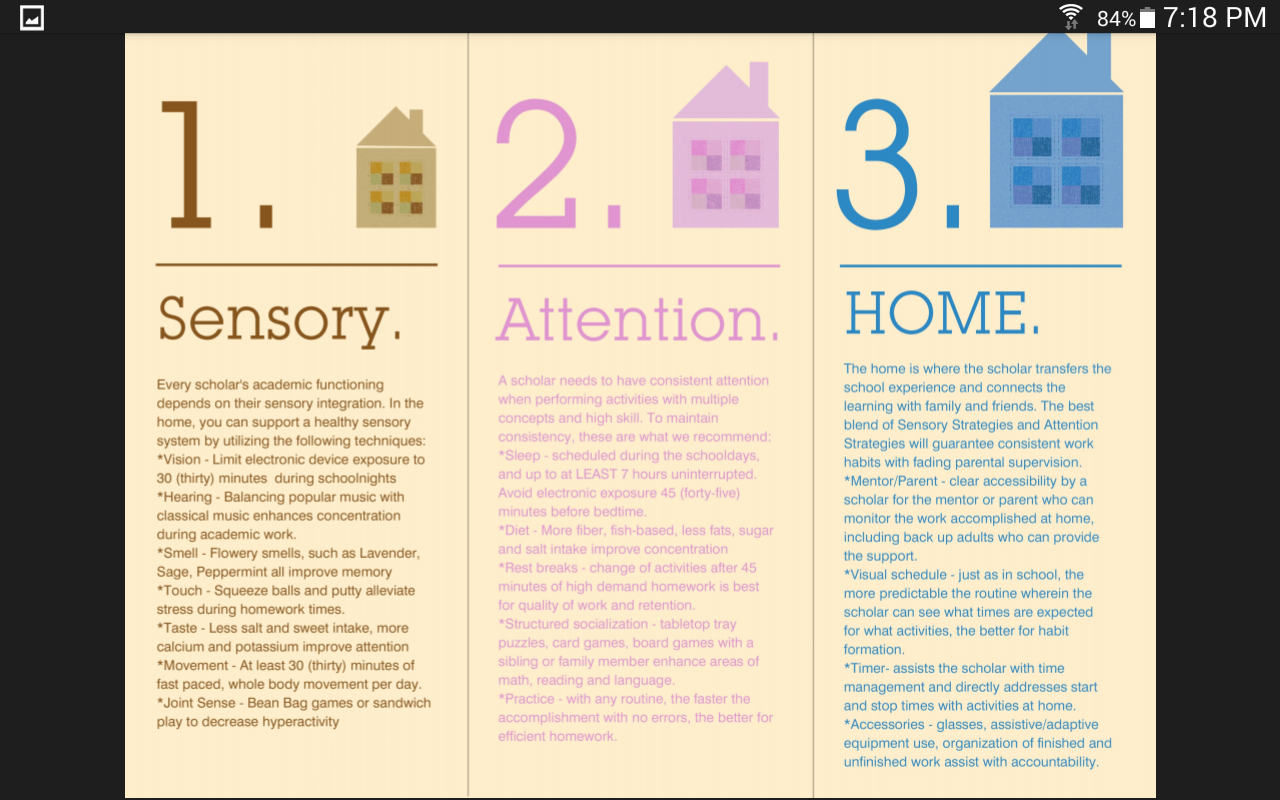
Please Share This Resource With Parents

Thank you to the parents of East Harlem Scholars Academy in New York, NY for coming to a seminar today on campus.  This brochure was provided to them by one of ESNP’s therapy partners to the parents as a quick reference to help their children at home. If you would want to use this free resource, or want to use the information in the brochure, just contact us via email or through this site.

image

image

ESNP Podcast 3: Education, Meet Neuro

Special Education: Redesigned and Redefined

BFyjIO4CMAAXatbWhen a bright eyed and idealistic teacher walks into the classroom, she does not have any pre-conceived notions that the mission statement of the school will be vaguely if at all reflected in the daily battle called teaching. The act of teaching is a juggernaut of sorts: between the principals, the administrators, the board members, and/or the politics — that it may feel like a fluke if the teacher maintains sight of the student, or if the student can honestly say that the teacher is, well, teaching.

Now, add a dash of one, or maybe three of the 13 special education classifications in the mix of students in a classroom of 28 to 30 students. This teacher may or may not have any background knowledge on educational disabilities, best practices for children classified with these disabilities; however it is a safe assumption that within this classroom of students, those who are not or cannot conform will stand out. And by the year’s end, the previously idealistic teacher may be anything but. Additionally, she may have fallen into damaging stereotypical thinking and labeling because she was never given the opportunity or education to think differently.

Most education professionals are aware of the studies that reveal teachers’ negative bias toward students labeled as having a learning disability. These studies have concluded that teacher’s rate behaviors more negatively, put less effort into educating these students and recommend them less for gifted education, even when given evidence of giftedness. Unfortunately, the why behind this occurrence is relatively easy to answer. Despite the progress at the federal level for children with disabilities since the 1970s, the stereotypes associated with the Special Ed label remains engrained in the general public as well as general ed mindset. Gaining access to a free and appropriate public education has done only that. The doors have been opened and the children welcomed in. Yet, the question begs to be asked: “are these students being taught?” Perhaps it is not the students we should be labeling as disabled or unable to learn, but rather the schools and the education system as a whole.

L30009e5et’s take a snapshot of the current system: schools invest thousands of dollars in curriculums that align to the common core standards, which tout an increase reading and math proficiency. Yet these curriculums are changed yearly because student scores do not increase at the expected rate. Some schools banned use of textbooks and teachers, who have been supposedly taught how to teach are also now expected to create curriculums or piece together a decade worth of rejected curriculums oftentimes for either multiple grades or multiple subjects. And within this disorganized system, children who struggle to learn within a traditional classroom, for reasons neuropsychologists are still trying to determine, are expected to adapt and learn in the same way, at the same rate with the same retention as their typically developing peers. Administrators and teachers alike, are allowed to overlook this since their academic background never afforded them an opportunity to learn nor required it of them. Yet the perfectly typical students with atypical brains become the ones punished for this oversight. Not only do teachers have decreased expectations, which leads to decreased effort; being labeled as special ed is shown to have a negative impact on self-esteem.

Taylor et. al found that students with generic special education labels had significantly lower self esteem compared to children with specific labels such as dyslexia. Furthermore, there was no difference in self-esteem between those identified and labeled as dyslexic to those without a special education and/or disability label. The authors concluded that children with a general label “offers very little in the way of an explanation for the child’s academic difficulties and because targeted interventions are not as available for those with a less specific label” This shows that it is the lack of transparency, discussion, effective interventions given to children with non-specific learning disabilities that play a major role in decreased self-esteem. Additionally, it was noted that there was stigma from peers more often associated with classroom labels of resource room and special class than the label of a generic or specific disability.  These conclusions indicate that environment, misconception, lack of discussion, transparency, and inclusion building measures within a community are to blame for decreased self-esteem, ridicule and teasing among students with disabilities, not the disability itself.

This reinforces the notion that schools and the education system are disabled and disabling those students who learn differently. Ideally, teachers and students alike would be equipped and well versed in what ilabeling-kidst means to have a disability, the strengths and weaknesses associated with that disability and strategies in which that student can overcome barriers within academic institutions in order to find success. However, this is next to impossible when teachers are not required to learn more than simple terminology associated with educational disabilities such as IEP, learning disability, and maybe related services. In 2013, 13% of school-aged students in public school were classified as having a learning disability. That means 4 students in a class of 30 will have an IEP and receive special education services of some sort. However, there are typically students who have not been identified or whose parents do not want them classified and receiving services specifically because of the stigma associated with it; therefore, it is safe to assume that approximately 1out of every 5 within a class of 30 students will have some form of a a disability. Yet, the teacher in the general education classroom is not required to have any prior knowledge about the disability, how to teach effectively to students with that given disability or even what supports that child might need; those responsible fall to the special education teacher of the Special Education Support Services Teacher who is typically with the student for about 5 hours a week. The additional 25 -30 hours, the student is left to his or her own devices in how to mange.

In no other profession, would a business that provided an qualified employee on average 13 – 17% of the time be considered “appropriate” to meeting the needs of the business or consumers. Yet, under the current law, for students with disabilities placed in inclusion classrooms, this is considered just that. Perhaps it is time to stop dis-abelling students and start enabling our education system by educating educators to actually teach to the brains, the bodies and the minds of the learners in their classrooms. This would of course require general education teachers to take courses about educational classifications, differentiation, and special education law, but all teachers to demonstrate proficient knowledge in the developing brain, body and mind including neuroanatomy, neuropsychology and cognitive psychology to name just a few. It is time to enable not only students, but teachers and administrators, by un-labeling teachers as general or special education and in turn removing the stigmatizing labels from students. No education should just be general; in order for all students to achieve their true potential, all education should be special and built on a scientific and wholistic foundation of knowledge. 

So until the time schools either have an alleviated pressure to pack classrooms to the maximum capacity, and/or the testing rigor is substituted with individual performance aptitude (similar to portfolio based measurements), the sting of bias and the risk of a child’s learning falling through the juggernaut remains at large.

T’is the Season for Depression, And How to Shake it Off

It is definitely the heart of winter, mid-February, and we would be lucky if we had a week that didn’t have frigid temperatures, snowfall and blizzard-type winds, and long nights. Compared to the spring and summer seasons, winter in the northeastern hemisphere of the United States challenge even the happiest of people — weather conditions force us to stay indoors as much as possible, unless we emancipate ourselves from the city during these times into a cabin in the woods with hot cocoa and recreational activities meant for the season.

I am willing to bet however we aren’t all as lucky; city life and the responsibilities that come with it keep us close to it even in the harshest winter weather conditions. Compound that feeling of being trapped with heavy layered clothing, dangerous walking and commuting conditions, and gray, dreary short days that at 5 pm remind you it is wintertime with it’s pitch black quick nightfall.

Understandably this time of year, after the holidays have passed, depression sets in full force. There are those of us, however, who suffer a more consistent, cyclical type of depression this time of year called Season Affective Disorder or SAD. SAD has been recognized and included in the diagnostic classification system of the Diagnostic and Statistical Manual for Mental Disorders, Fourth Edition as major depressive disorder with seasonal pattern. In most cases, seasonal affective disorder symptoms appear during late fall or early winter and go away during the sunnier days of spring and summer. However, for those people with the opposite pattern, meaning have symptoms that begin in spring or summer may be suffering from a major depressive disorder.

Let’s look at this table below, courtesy of information from the Mayo Clinic:

Mayo Clinic Table

There is a clear difference identified between Major Depression affected by SAD, Fall and Winter SAD stand alone, and then a category that actually has a Spring and Summer SAD! Obviously, the most popular kind is in the fall and winter, however there are those who have difficulties thriving in the Spring and Summer and display the symptoms listed above.

After serving a distinguished career at the National Institute of Mental Health researching cyclical mood patterns, Norman E. Rosenthal, MD, currently a Clinical Professor of Psychiatry at Georgetown University Medical School and Medical Director of the Capital Clinical Research Associates, in Rockville, Maryland, sheds light on the topic in an interview  with Psychiatry (As published in NICH website).

Dr. Rosenthal claims, “Every year, as the days become short and dark, people with SAD develop a predictable set of symptoms. They slow down and have a hard time waking up in the morning. Their energy level decreases, they tend to eat more, especially sweets and starches, and they gain weight. Their concentration suffers, and they withdraw from friends and family. As you can imagine, their work and relationships suffer, and they can become quite depressed. This symptom cluster often lasts for four or five months until the days become longer again. Since the syndrome is linked to a lack of light, people with SAD may become depressed during cloudy weather at any time of year, or if they are confined to windowless offices or basement apartments.”

He also says that SAD in its full form affects productivity in work or school, affect interpersonal relationships, and causes a marked loss of interest or pleasure in most activities. There is a milder form of seasonal disorder which is called the winter blues and yields similar symptoms of decreased energy and increased appetite.  This can also affect enthusiasm and productivity. For instance, people with SAD report sleeping an average of 2.5 hours more in winter than in the summer, whereas people with winter blues sleep 1.7 hours more (the general population sleeps 0.7 hours more in the winter).

So how do we combat depression, SAD or otherwise?

Typical Major Depression that is not directly affected by SAD are affected by Dopamine and Serotonin levels. A Study in the International Journal of Neuroscience in 2005 by TIFFANY FIELD, MARIA HERNANDEZ-REIF, MIGUEL DIEGO, SAUL SCHANBERG, and CYNTHIA KUHN determined that in studies cortisol was assayed either in saliva or in urine, significant decreases were noted in cortisol levels (averaging decreases 31%). In studies in which the activating neurotransmitters (serotonin and dopamine) were assayed in urine, an average increase of 28% was noted for serotonin and an average increase of 31% was noted for dopamine. These studies combined suggest the stress-alleviating effects (decreased cortisol) and the activating effects (increased serotonin and dopamine) of massage therapy on a variety of medical conditions and stressful experiences. They suggest that massage therapy improves overall wellness that can be utilized as an external source of increasing the happy neurotransmitters.

In some cases, Norepinephrine was also tagged to be part of the major depression cycle. See the image below:

Norepinephrine-Dopamine-Serotonin Venn

The three neurotransmitters combine to maintain mood, focus and learning. Interestingly enough however, the serotonin-norepinephrine connection is what mostly determines the increase in depression, while dopamine-serotonin here is claimed to be highly involved in learning. Would it be safe to say then if the focus was on new learning and equipping one with new skills, that this may also offset major depression with chemical intervention to stabilize the serotonin-norepinephrine channels? New learning has been related to initially boosting dopamine which attracts wellness and confidence, and in turn effects the serotonin levels and pulls away from the norepinephrine pull to depression.

However, learning something new is only a small part of the solution. There are many more complex factors in major depression such as genetics, environmental situations, lifestyle choices which includes work-rest-exercise balance, diet and sleep.

For those with SAD on either the Fall-Winter Seasons or the Spring-Summer Seasons, Dr. Rosenthal says commonly used therapies include Light therapy, psychotherapy, and medications are the main treatments for SAD. Also, stress management and exercise programs can be helpful. Although the first controlled studies of light therapy were conducted only 25 years ago, this treatment has subsequently become the mainstay of SAD therapy throughout the world.

Mayo clinic also indicates that one’s biological clock (circadian rhythm) is part of what is affected by SAD sufferers. The reduced level of sunlight in fall and winter may cause winter-onset SAD.The changes in the season can disrupt the balance of the body’s level of melatonin, which plays a role in sleep patterns and mood. Reduced sunlight can cause a drop in serotonin that may trigger depression.

Dr. Rosenthal agrees with the need for therapeutic sunlight. He says, “Sixty to 80 percent of SAD sufferers benefit from light therapy. The amount of light varies from person to person. The best light therapy units are about 1ft by 1.5ft in surface areas and use white fluorescent lights behind a plastic diffusing screen, which filter out ultraviolet rays. Mornings seem the best time for light therapy to work, although the treatments can be divided during the day. Most people respond to light therapy within 2 to 4 days of initiating treatment. Although the amount of time needed varies, most people need between 30 and 90 minutes (10,000lux) of light therapy per day.”

In the New York Times article by Roni Rabin in 2011, “A Portable Glow to Help Those Winter Blues,” it quotes a 2006 multicenter double-blind randomized controlled trial that compared bright-light therapy head to head with the popular antidepressant Prozac (fluoxetine) in 96 subjects found the two treatments equally effective for alleviating winter depression, though light produced results faster, usually within a week, and with fewer side effects.

Presently, popular companies like Verilux, Nature Bright, and Northern Light Technologies have come up with consumer based light boxes that can be used all year round at home and in other locations with lack of light. Dr. Andrew Weil, a doctor and author who focuses on holistic health recommends SAD sufferers must sit in front of the light for about a half an hour per day. Light therapy is reputed to work in 80 percent of all cases of SAD. This treatment can relieve symptoms within a few days, but sometimes takes as long as two weeks or more. He cautions that  while light boxes can be purchased without a prescription, a physician or other mental health professional can provide guidelines as to how to use a light therapy box for maximum effectiveness and may recommend a particular light box (you may need a doctor’s prescription if you’re seeking insurance coverage for the cost of a light therapy box).

Exposure to natural sunlight as well during the long winter months is recommended as well as a walk outside during the morning hours, however that is dependent on lifestyle and weather conditions unfortunately. The bottomline is this: whether it is major depression or SAD that causes you to be frozen in your own life, aiming for the serotonin-dopamine increase will ultimately be the key to off-setting the symptoms and hopefully improve the quality of living in the long run.

ESNP Podcast 2: Sustaining Holiday-Esque Happiness Day After Day

Love with the Brain, the Mind and the Body

Sitting at a table at Tillie’s, my favorite, independent Brooklyn café, I find myself easily distracted. The people are much more interesting to watch than my work is to complete. A guy of about 23 years walks in. He’s nearly 6 feet tall, very thing, longer, thick wavy dark hair—in a word attractive. I decide to watch him. What is his story? Does he go to school? He orders a large Raspberry Iced-Tea…or I assume that’s what he’s ordered because it looks exactly like mine, and that is what I ordered. He takes out his phone and fiddles with it. Boring. I got back to my work. About thirty minutes later, a girl walks in. Tall, dark olive skin, black long straight hair, very thin—in a word attractive. She is carrying a medium size white bag, most likely with food in it. He looks up and tries very hard to hide the smile the smile that is growing inside of him at the sight of HER, her walking through the door weaving among the chairs toward HIM. She hands him the bag and sits down in one swift smooth motion, maybe she’s a dancer, She, too, cannot hide the smile. The bag is more than a bag, perhaps an expression of love. She leaves to get something to drink. He immediately opens the bag and pulls out a small note—filled front and back—about the size of post-it—the smile trying so hard to stay hidden returns. He reads the note, more in lover with her than ever.

Love. Almost as essential as breathing. Why? Because love is ubiquitous. People love with their entire self: their brains, their minds, their bodies; No one loves with just their hearts.

According to Helen Fisher at Rutgers University, there are 3 stages; lust, attraction, and attachment. Robert Sternberg proposes a similar idea: the love triangle. The love triad includes: intimacy, commitment and passion, which Sternberg demonstrates is found in the seven different types of love determined by the power of each point of the triad:

1. Consummate: highest level of level, equal presence of intimacy, commitment and passion

2. Infatuated: Includes only passion

3. Fatuous: Includes equal amounts of passion and commitment

4. Empty: Includes only commitment

5. Companionate: Includes intimacy and commitment

6. Romantic: Includes intimacy and passion

7. Liking/friendship: Includes only intimacy

However, each researcher’s theory on love show the impact of love on they brain, the mind and the body.

The Brain on Love

Love literally changes our brain.

The brain on love is akin to the brain on drugs given the release of hormones that occur especially in Helen Fisher’s second stage of love: Attraction. In this is stage, greater than normal levels of dopamine are released in the brain. Dopamine release triggers the reward and pleasure center in the brain; the same chemical released when using cocaine. In addition, to dopamine, many other neurotransmitters and/or hormones are released: cortisol, serotonin, norepinephrine, oxytocin, and vasopressin. The release of these neurotransmitters are literally changing the wiring and firing of the neurons. Therein, changing the brain, which changes the mind and the body. In Sternberg’s love triad, commitment, the active decision to stay in the relationship, represents the brain. A connection to people’s evolved pre-frontal cortex and executive function skills such as goal-directed  or task-directed persistence. Loving only with the mind would be considered empty love according to Sternberg.

The Mind on Love

The mind on love leads to sharing, trust, and intimacy.

The mind on love is a result of the release of serotonin. Helen Fisher found that serotonin is responsible for the inability of one to stop thinking about his or her partner and the rose-colored glasses effect. The ability to see the object of affection as more desirable and the relationship as more unique than others. This can be equated to intimacy on Sternberg’s love triangle. Dr. Arthur Aron demonstrated the ability to create intimacy even within a lab setting when complete strangers were paired with one another and given approximately 45 minutes to discuss 36 questions. After the discussion participants were asked to look into each other’s eyes for 4 minutes without speaking. Two participants after this experiment ended up married. According to Sternberg, intimacy is critical in many types of love including: consummate, companionate, romantic and liking/friendship. Intimacy represents the mind on love because it has the ability to occur despite the absence of an end-goal or physical attraction.

The Body on Love

The Body on love is felt by the heart.

This is the most common reference to love because people associate love with their hearts. Indeed, loving another person involves a change in heart-rate. However, this due to the release of cortisol and norepinephrine. Yet, the bodily changes, which cue people to the fact that they are experiencing a strong and separate emotion from those on a daily basis is the most easily identifiable because it involves the body. According to Helen Fisher, body love is the first stage of love: lust. It leads to the other stages taking place. Dr. Aron, found that it takes only 90 seconds to determine if someone finds another attractive. The body on love associated with romantic love or what is perceived to be romantic love, but may in fact include: consummate, infatuated or fatuous types of love.

One does not fall ‘in’ or ‘out’ of love One grows in love. ~ Leo buscaglia


Regardless of how love is categorized, labeled, or defined, the experience of love, regardless of type is unique to very. Love is universally acknowledge, felt and expressed. The great equalizer so to speak; given the uncontrollable impact it has on the brain it can make the most eloquent speaker a mumbling mess or turn the introverted intellect into a dashing diva. Fall…leap…sneak…grow love in whatever form. Love is meant to be experienced with the brain, the body and the mind…not just the heart.

Celebrate. Love. Everyday.

Metacognition is to Mindfulness (Not Everyone Can Always Teach…)

Big buzz words, both of them in the title of this article. One featuring a significant process of the Pre-Frontal Cortex, and the other, affectation of awareness from the entire brain, based upon the driving of the Pre-Frontal Cortex. However, let’s simplify the language of Metacognition and veer away from the “thinking about thinking” cliché (albeit that is what that is, the repetitive use of the definition is overused).

Meta (after, or beyond) cognition (conscious mental activities : the activities of thinking, understanding, learning, and remembering) is that ten second delay before the thinking is decided upon as the last answer or decision. It is the pulling yourself out of your own awareness to look at the process that is involved in your own thinking: from the first suggestion of an idea to the last decided action. Metacognition then is the conscious mental activity that is after or beyond the activities of thinking, understanding, learning and remembering.

The Metacognition Phase

It’s what we commonly refer to as THINKING ON YOUR FEET. When you rely on the automatic responses of behavior that you tuck in the memory bank for the ‘rainy days’ and successfully combine these responses without reference to a specific technique or to a pattern, you have successfully practiced the art of metacognition. Most of us use the metacognitive process in its basest sense that its application is usually muted.

Labels, both rigid and tailored to testing have been directing the voice of education. Plotting one’s education based on the ability to test versus improving the quality of the inquiring mind has recently been winning the battle of what standards should look like and what ‘schooling’ should seem to be in the eyes of a successful community, and in the grander picture, what the world expects of a citizen belonging to a particular first-world geographical location. Teaching to the BRAIN inside the human being has been scoffed in skepticism and propaganda by purists of testing protocol, and worse, by those who insist that the BRAIN is a static piece of software that can only evolve in, well, the dog-eat-dog thriving situations to effectively learn (forgetting that the BODY is attached to it, inconveniently).

And yet, there are those who do acknowledge that there is a BRAIN that echoes its decisions on the shadow called a MIND (which apparently is highly controversial for those who have either no imagination, philosophical inclinations, or even quantum physical understanding of cause and effect). The MIND is not simply an artistic, metaphorical description of romantics or serialists.

The In-Between Phase: Anticipation From Metacognition to Mindfulness

Mind (the part of a person that thinks, reasons, feels, and remembers) fulness (the eventual quality or state of being full). Mindfulness then is inherently a state of consciousness. Although awareness and attention to present events and experiences are given features of the human organism, these qualities can vary considerably, from heightened states of clarity and sensitivity to low levels, as in habitual, automatic, mindless, or blunted thought or action (Wallace, 1999).  Therefore, Mindfulness is the eventual quality, state or part of a person that thinks, reasons, feels and remembers that is full.

Conscious activities of thinking lead to filling up the state of a person that thinks, feels, reasons and remembers. Conscious and purposeful filling, which is aimed at harnessing powers of understanding from genetic, evolutionary biological cognitive methods, now contrast with teaching-to-test. Conscious and meaningful activities where learning is matched with the learner’s natural aptitude while harnessing multiple abilities of learning.

Teaching with the Meta-Mind process is the ideal, not necessarily realistic. The Teacher, broken as Teach (to cause or help a person to learn how to do something by giving lessons and showing how it is done) -er (person or thing belonging to or associated with something) fulfills this process with such subconsciousness if you ask him or her the process of the real teaching, they would have to pause and trace the Meta of how they begin. And when there are words to describe this magical process (taking away the paperwork load and the political requirements), the Teacher’s Metacognition  begins with an idea, a seed, a stage either theatrical, comical, empirical or thoughtful. The Teacher  is actively immersed in the conscious mental activity that is after or beyond the activities of thinking, understanding, learning and remembering.  The preparation for every scenario entails an almost see something-say something proactiveness; student temperament will never be the same in spite of the occurrence in the exact classroom, having the exact community of students, and/or support through the same rules and regulations. Only homeostasis remains similar as learning experiences are emotionally, memory-dependent.

The students come, the dance begins of giving and taking…sometimes with upstarts and hiccups; however, with the arsenal from the Teacher’s Meta phase, the learning is curved to where it momentarily docks. After the last word on the subject, the wards attach the knowledge to a memory base, perhaps a mnemonic one for future reference. And the Teacher? He or She goes into the Mind phase: Mindfulness of students sharing, discovering, uncovering and maybe not fully comprehending what just had happened in the minutes before with the topic at hand. The Teacher in this phase enters into that eventual quality, state or part of a person that thinks, reasons, feels and remembers that is full.

The Mindfulness Phase: Is  it the Silhouette or is it the Canvass?
The Mindfulness Phase: Is it the Silhouette or is it the Canvas?

How then can the teacher be unreasonably requested to match the learning of a subject that is not only too cognitively complex for the developing brain of the current roster he or she is given, but also when there is a predetermination of the worded script, the presentation of the activity or knowledge base, and/or finely trimmed boundaries they are unable to be flexible with? How is that called common core really a commonality? The Meta-Mind cycle is interrupted, the learning process is artificial, and citizens are not created, rather parrots with haphazard training preparation for the competitively overflowing sea of professional niches. The Teacher ceases to have a democratic role in the abilities and skills he or she thought was hired to use in the classroom; amazingly, all that’s needed to do this newly reinvented job are professionals with paper pedigree to continually beat down their passion or dedication…unless the latter is just a bad dream someone decided to share with us.

Please allow the teachers to teach again. Respect the Meta-Mind Process of Learning.

ESNP Podcast 1: Backtory

User-Friendly Interpretation on Sensory Processing Science and The Learner’s Consciousness: Part One

We have touched on the subject on our previous articles on how negative behavior is often times intermixed or interpreted as willful or choice-driven, while in some cases, these behaviors have an underlying sensory processing root. To cite a specific example, let’s say that one  who utilizes public transportation when going to work daily is unable to tolerate other people’s conversations on the shared space and would require noise cancelling headphones to be able to survive the commute.  What we oftentimes call as our preferences or likes boil down to what ‘makes sense’ or ‘computes’ with the section of the brain that processes all of the sensorimotor experience: the temporo-parietal sliver that receives and interprets all of what surrounds us and is experienced within us.

Because these systems are so automatic, just as the heart beats without us having to remind it to do so, we often take it for granted that without the ‘correct’ interpretation of what is going on, we will not make the appropriate response. Majority of our reflexes also come from this section of automaticity due to either a retrieved and learned sensory experience (e.g. touching a boiling kettle once before will permanently recall the sensory experience of fight-or-flight burning pain on the particular body part).

The Sensory Processing of a Learner: Many Intelligence Types

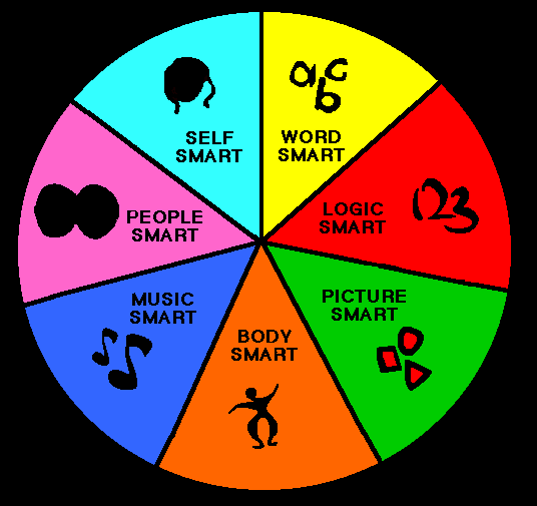
Let’s Look at the two pictures below. On the left side you will notice that we have named the seven (7) senses of the body as primarily responsible in processing the information from the environment.  The vision,  hearing,  smell,  touch,  taste,  movement or kinesthetic sense, and proprioception or position in space sense all come together and interpret the environment for the person based on each of the sensation’s primary function. Thus we call this the Stimulation Source.  We will discuss the details of processing science in the next section. The Stimulation Source in the simplest sense is  the interpretation of the sensations in the brain after it had been given meaning by the cerebral cortex, specifically the temporo-parietal sections. These are the many directions an interpretation of the sensations can be expressed by a person: visual-spatial, bodily kinesthetic,  musical, interpersonal,  intrapersonal, musical,  linguustic, logical-mathematical,  and ecological. These were initially introduced into the mainstream by Howard Gardner in his Theory of Multiple Intelligences.  In our practice however we take it a step further and consider it as the Learner’s Response.  What we have seen is that the interpretation of the senses can only be expressed accordingly based on the abilities of the brain to coordinate the meaning of the sensations received,  thus the Learner’s Response is tied to a person’s natural inclination dependent on the correct release of the information to the external environment.

The Learner's Response: Sensations Transformed into Many Intelligences
The Learner’s Response: Sensations Transformed into Many Intelligences

The Stimulation Source:  Seven Bodily Sesnations
The Stimulation Source: Seven Bodily Senses Gathering Information from the environment

If we created an example from listening to ones ipod,  as soon as the brain realizes that  it’s the sense of hearing that is stimulating it, the sound is processed and given meaning by the cerebral cortex and then sent back out to the Learner. Depending on the Learner’s natural abilities, the responses will vary from person to person. One who is kinesthetic may decide to get up and dance.  One who is visual-spatial may decide to research the singer online for a live version of the song. While someone who is intrapersonal may become reflective and try too recall an association of the song with a memory or a personal thought. This explains why even if the senses are receiving the information from the environment accurately, the responses vary from  person to person depending on their natural ability.

Sensory Processing Science: A. Jean Ayres in User-Friendly Language

Dr. A. Jean  Ayres, the pioneering Occupational Therapist in sensory integration theory summed up best the process of  the body’s ability to process sensory input. She posited that there were 7 steps that went into the brain’s processing: reception, detection, integration, praxis, discrimination, postural responses and modulation. She also did say that these steps are done in heirarchy, in order. If one step is missing, then the processing becomes faulty and the brain will not be able to send out the accurate interpretation to the learner to respond to. And of all of these steps, it is Sensory Modulation that is externalized by the Learner; by having a sensory modulation disorder, that is the obvious signal there is a hiccup in the flow of the sensory system from the einformation gathering to the brain processing, to of course the Learner’s responses.

The Sensory Processing Science: User-Friendly Language

Focus on Sensory Modulation Disorder: Impact on Learner’s Consciousness

As was mentioned in the previous section, it is the Sensory Modulation Section that mist if not all sensory issues are evidenced, based on Learner’s Response.  Now there are several types of Sensory Processing Disorders: Sensory Modulation Disorders (Sensory Hypo and Hypersensitivity,  and Sensory Seeking), Postural Disorders, and Sensory Discrimination Disorders. Of all of these however,  it has bern shown that Sensory Modulation,  the very last step of the hierarchy of sensory pricessing has the most damaging effects on the Learner’s ability to process academic and social information.

For specific details on the manifestations of Sensory Modulation Disorder, we created a table using research information by Carol Kranowitz in her book, The Out of Sync Child.

Refer to the table below:

Synthesized Sensory Modulation Disorder Chart (As Based Off of Carol kranowitz)
Synthesized Sensory Modulation Disorder Chart (As Based Off of Carol Stock Kranowitz)

Now that we have made the connection between the Learner’s Response to Stimulaton Source, how then can we correct the sensory modulation deficits? The answer: An Executive Functioning- Sensory Based Diet of course, composed of targeted activities  from a sensation to cognitive develomental perspective that are aimed to correct the gathering-interpretation process in order to align the learning responses as well . That discussion will be part two of this discussion, the next post to this series. In the meantime, check out our ESNP Recommends tab for more resources and our articles under Body Breakthroughs for additional ideas.